
Ahead of the digital switchover, Calla Marenghi, Marketing Campaign Manager at Orbital Net, explains why early action is essential for care providers to futureproof their infrastructure.
The UK care sector is heading towards a significant connectivity change. In January 2027, the UK’s entire analogue telephone network will be permanently switched off as part of the national digital switchover. This initiative, led by Openreach and supported by telecommunications providers across the UK, will mark the end of the Public Switched Telephone Network (PSTN) and Integrated Services Digital Network (ISDN) lines.
Every call, alarm, and emergency system will soon run over internet connections and digital networks. That means your service becomes dependent on continuous power, resilient broadband, and robust cybersecurity.
For many care providers, this transition is not just a technical upgrade, it could be a complete transformation of how communication, monitoring, and emergency systems operate if they rely on analogue systems. From critical telecare devices to traditional landlines, and even Wi-Fi infrastructure, the effect of the switchover has the potential to be felt throughout every part of a care home. So, what exactly does the switchover mean for residential and nursing care providers, and how can they prepare?

What is the 2027 digital switchover?
The digital switchover is the UK’s transition from analogue phone networks (PSTN and ISDN) to all-Internet Protocol (IP) technology. From January 2027, all telephone services will need to operate over the internet using Voice over Internet Protocol (VoIP). This includes not only phones, but any systems that currently depend on traditional phone (analogue) lines including many that are crucial in the care sector.
The move is part of the UK’s digital transformation strategy, aimed at creating a more reliable, modern telecommunications infrastructure. However, it also creates a ticking clock for care homes reliant on legacy systems to adapt or risk service failure.
The impact for care homes and residential facilities
One of the most immediate and pressing challenges for care homes is that many commonly used systems currently rely on analogue phone lines connected through the PSTN. Once this network is decommissioned, any devices that have not been migrated to digital alternatives will simply stop functioning. This could pose serious safety and operational risks if action is not taken ahead of time.
Many essential devices in care homes may run on analogue lines, including:
- Emergency red phones: These dedicated lines are used for urgent medical or security situations. If not switched to a VoIP-compatible solution, they will be rendered non-operational, cutting off a vital safety lifeline.
- Telecare and fall alert systems: Many of these life-saving systems automatically dial support or alert staff when a resident falls or needs assistance. Most legacy telecare solutions are analogue-based and will fail after the switch unless upgraded to digital-ready platforms.
- Intruder and lift alarms: These systems are often linked via analogue connections. Without an upgrade to IP or Global System for Mobile Communications (GSM) alternatives, facilities risk serious security vulnerabilities or inoperable lifts.
- Closed-circuit television (CCTV) and security systems: Older CCTV systems may be hardwired to analogue lines for remote monitoring or alerts. Moving to an IP-based CCTV system not only ensures continuity post-switchover but also enables improved video quality and smart security features.
- Electronic Point of Sale (EPOS) machines: If on-site café or reception areas use payment terminals connected via phone lines, these may also become non-functional. New systems connected via broadband or mobile networks are required to process payments securely.
- Fax machines: While becoming increasingly obsolete, some care facilities still rely on fax machines for administrative or medical correspondence. Fax machines do not work reliably over VoIP lines and should be replaced with secure email or cloud faxing services.
- Older energy metering equipment: Some utility providers use half-hourly metering systems that report usage via analogue phone lines. These meters will need replacing with smart or IP-enabled devices to ensure continued reporting and billing accuracy.
These systems will not work on IP networks unless they are specifically upgraded or replaced with digital alternatives. The risk is not just service disruption but a complete failure in systems with some devices responsible for resident safety.
Why failover and battery backups are critical
After the switchover, every service depends on two things: power and connectivity. A power cut or broadband outage could instantly take phones, alarms, CCTV, and Wi-Fi offline.
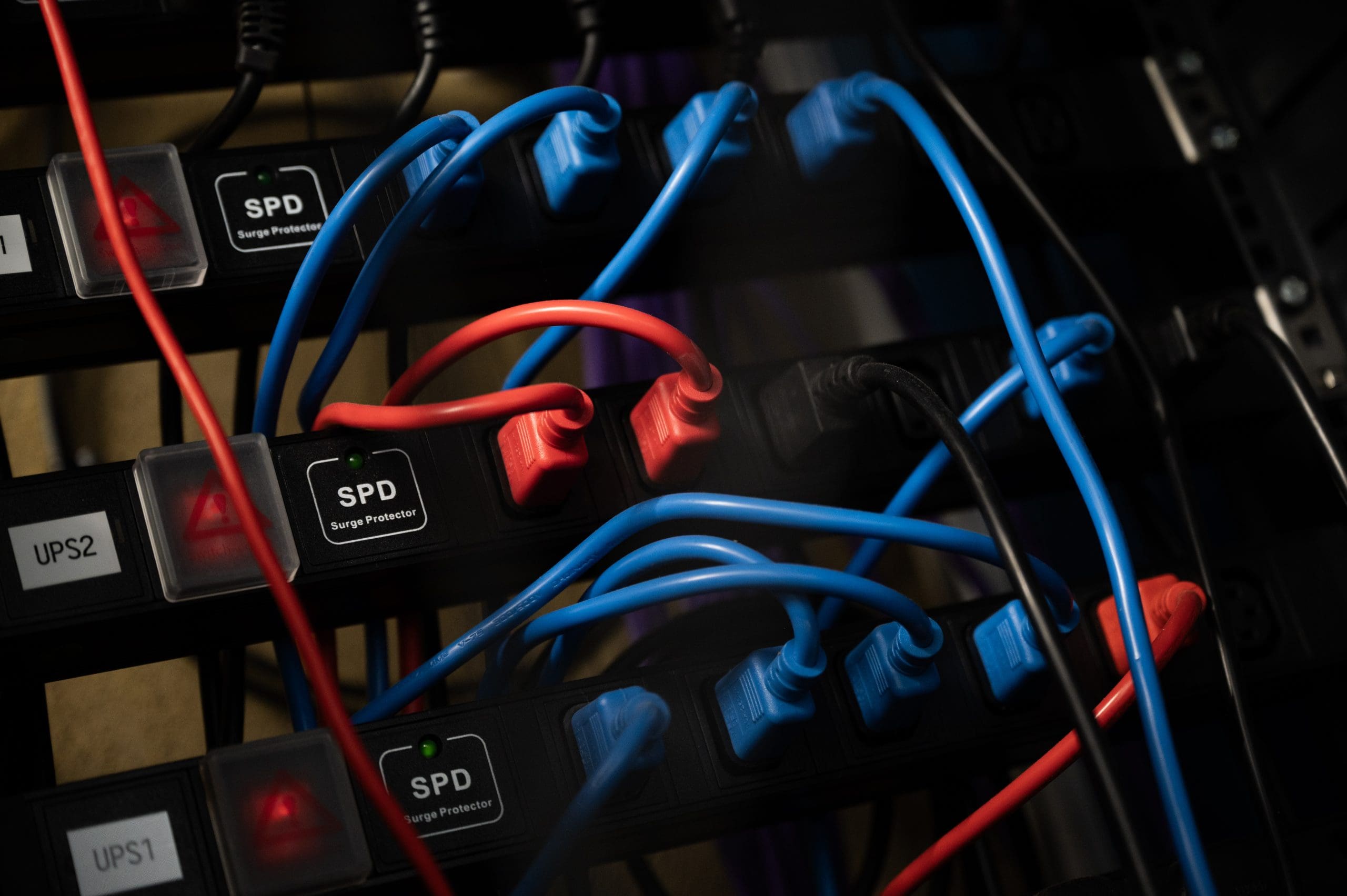
With greater reliance on internet connectivity, any downtime can significantly disrupt care providers. To safeguard continuity, providers should consider installing 4G or 5G failovers, which automatically switch to mobile networks if the primary connection fails. Battery backup systems (Uninterruptible power supplies (UPS)) for VoIP hardware and alarm panels are also essential, especially during power outages.
For critical environments, dual internet connectivity, such as combining a leased line with a failover can offer an additional layer of resilience, ensuring everything remains online even if one connection experiences issues.
These measures aren’t just IT upgrades but are essential parts of your business continuity plan. Providers should add them to their risk logs and review them regularly.
The hidden risk: Cybersecurity and GDPR
It’s easy to focus on the visible side of the digital switchover like changing phone systems and upgrading alarms but the shift to IP-based networks means care homes become part of the broader internet ecosystem. This creates new, and very real, vulnerabilities which need to be considered.
Care homes become more exposed to cyber threats and data protection risks. The adoption of cloud-based platforms and IP telephony increases the potential for cyberattacks, including the unauthorised access to sensitive patient data.
Staff should also receive ongoing training on cybersecurity best practices to maintain awareness.
Telephony systems must be upgraded to digital
After the switchover, traditional analogue phone lines will become obsolete. VoIP systems will take over, enabling voice calls via the internet. This means that care providers will need to upgrade their telephone infrastructure to a VoIP-based system if they have not done so already.
VoIP systems make it easier for staff to stay connected across the site, from nurses’ stations to communal areas, improving coordination during emergencies or resident incidents. Calls can be routed instantly to mobiles or cordless handsets, so critical alerts or family calls aren’t missed. Systems can easily integrate with 4G/5G failover connections and battery backups to keep lines running during power cuts or broadband outages.
VoIP typically reduces costs versus traditional phone lines, especially for homes with multiple extensions or frequent external calls. The average cost saving for businesses moving to a VoIP platform is £420 per year depending on size and call volume.
Increased demand on broadband
The switchover means that phones, alarms, and other systems will all rely on your internet connection. Without a high-speed, resilient connection, care homes risk call drops, alarm delays, or system downtime.
Internet connections will be upgraded to a fibre line by the switchover date but there is a likelihood that providers may need a better, more suitable connection to cope with the upgrades, new devices, and digital platforms.
Wi-Fi coverage: An overlooked vulnerability
A commonly overlooked impact of the digital switchover is the importance of site-wide Wi-Fi coverage. Many care homes currently rely on hardwired phones and systems that do not depend on wireless signals. However, the transition to digital platforms which includes VoIP handsets, mobile nurse call devices, smart monitoring equipment, and video conferencing demands strong, reliable wireless connectivity in every part of the building.
Systems like Wi-Fi-enabled telecare, VoIP phones, and cloud-based tools all rely on room-to-room Wi-Fi coverage. As more devices connect to the network, signal strength and bandwidth congestion could become issues, and providers may need to expand Wi-Fi coverage. Many care homes operate with legacy wireless access points that were never designed to handle high-volume, critical digital traffic. A poor Wi-Fi setup can result in dropped calls, failed alerts, or staff unable to access cloud-based resident files in real time which can put residents at risk.
Why delaying is the biggest risk. Although January 2027 may seem like a distant deadline, the risks of delaying action are already starting to appear. As more providers begin to prepare for the switchover, engineer availability will tighten, and lead times for new installations will increase. Equipment and installation costs may also rise as demand spikes. Meanwhile, existing analogue systems are expected to decline in quality, with call degradation and service outages becoming more common. Perhaps most critically, care homes that fail to migrate in time may find themselves entirely without voice services, which is a scenario that could severely compromise resident care and safety.
The upside: Why the digital switchover is a good thing. Despite the challenges, the digital switchover presents a powerful opportunity for care providers to modernise and improve the quality of their services. Moving to VoIP and cloud-based systems can significantly enhance communication methods, allowing for video calls with family members and GPs and facilitate the adoption of telehealth and remote monitoring solutions. Digital tools also improve staff responsiveness and mobility, and they support more efficient, integrated operations through cloud-based care management systems.
What should care providers do next?
To stay ahead of the switchover, care homes must start preparing now. The first step is to book a comprehensive digital audit, reviewing all existing systems, phones, alarms, internet connections, and Wi-Fi infrastructure. Upgrading infrastructure early will prevent last-minute stress, avoid delays due to limited installation capacity, and ensure access to the best pricing and equipment availability. It is essential to involve all stakeholders, from management and IT teams to frontline staff and residents, so everyone is informed and ready. Once new systems are in place, staff should receive thorough training to build confidence in their daily use.
Here is what every care homes should do over the next 6 months:
- Book a full digital audit: Review all telephony, alarms, internet, and Wi-Fi infrastructure.
- Upgrade infrastructure early: Avoid rushed installations or stock shortages by upgrading before demand spikes.
- Engage all stakeholders: Ensure managers, IT teams, staff, and residents understand what is changing.
- Train staff thoroughly: New systems only work if users are confident in using them.
- Plan for backup: Internet failover, battery backup, and contingency procedures are critical.
- Review cybersecurity: Ensure your new IP-based systems meet GDPR and security standards.
Orbital Net are offering free switchover audits
Orbital Net’s free audit service will assess your current telephony, internet infrastructure, Wi-Fi setup, and any other equipment that may be impacted by the move from traditional analogue lines to fully digital, IP-based systems. By identifying potential risks and compatibility issues early, we can help you plan an efficient and seamless migration, minimising the risk of downtime that could affect both staff and residents.
Calla Marenghi, Marketing Campaign Manager at Orbital Net.
Email: c.marenghi@orbital.net